 AUTOMATA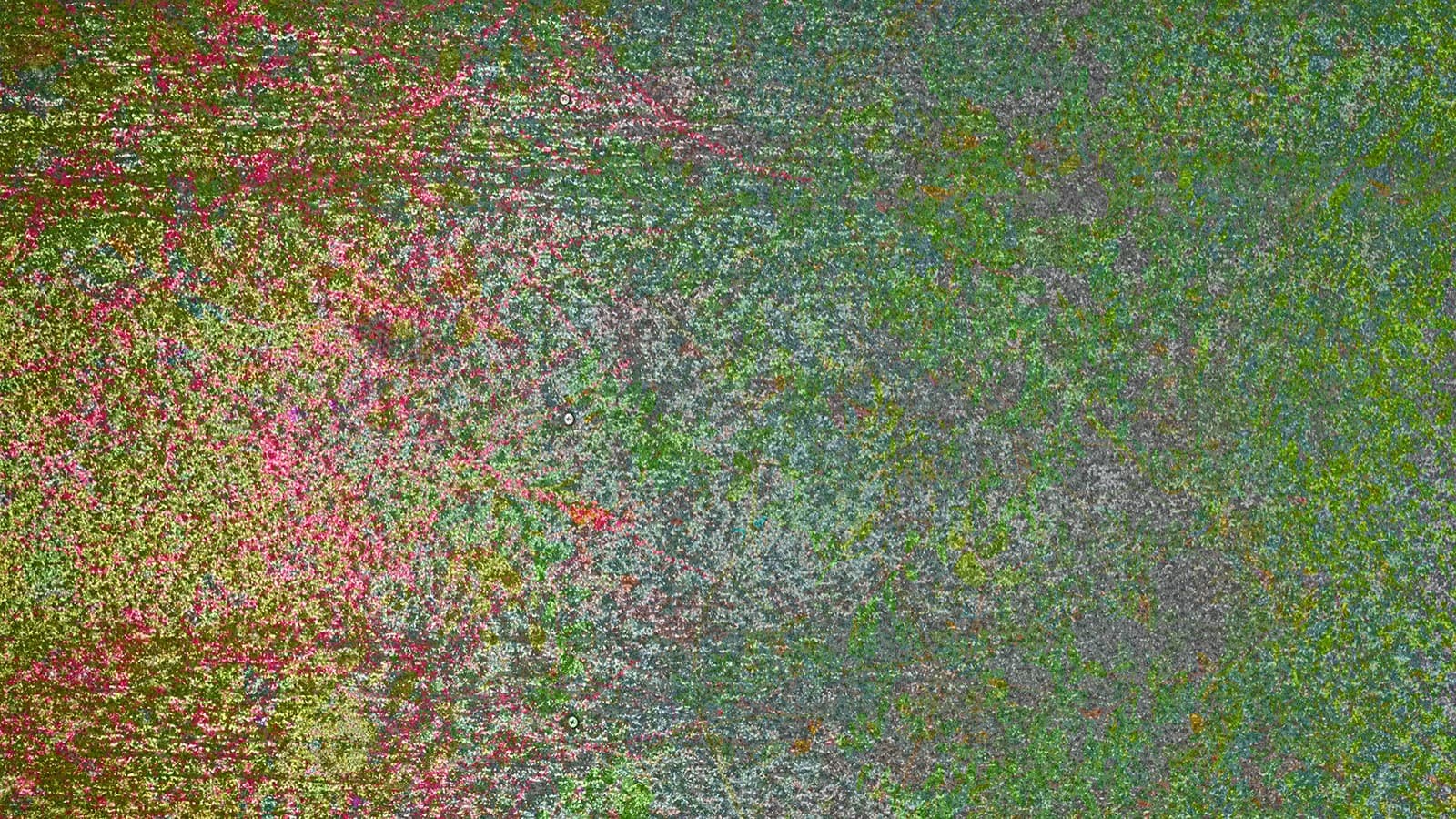
Overview
By George Legrady. 15 Historic Neural Style Transfer works from 2018, merging photographs from the iconic Claude Monet gardens at Giverny with images of rusted industrial surfaces.
For four decades, George Legrady has operated at the frontier of computational art—yet remains one of the most significant undiscovered pioneers of the digital age. While his installations run continuously in major public institutions and his work resides in the permanent collections of the Centre Pompidou, Whitney Museum, and SFMOMA, Legrady has never released his digital works as digital art until now.
Digital Giverny represents a historic moment: the first and only NFT collection from an artist whose practice predates the term "AI art" by decades. Created in 2018, this series of fifteen Neural Style Transfer compositions stands among the earliest artistic applications of the technique that would reshape visual culture—crafted just three years after the algorithm's introduction, when few artists recognized its potential.
These works merge photographs from Claude Monet's legendary gardens at Giverny with images of rusted industrial surfaces, using the Style Transfer algorithm to fuse the organic and the mechanical into something entirely new. The result is a meditation on transformation itself: nature reclaimed by time, the digital eye parsing beauty from decay, and the emergence of aesthetic possibilities that no human hand could achieve alone.
Now, as Legrady prepares for a major presentation in summer 2026, AUTOMATA is honored to introduce his historic digital works to collectors for the first time.
George Legrady
Hungarian-American-Canadian, b. Budapest
Lives and works in Santa Barbara, California and Paris, France
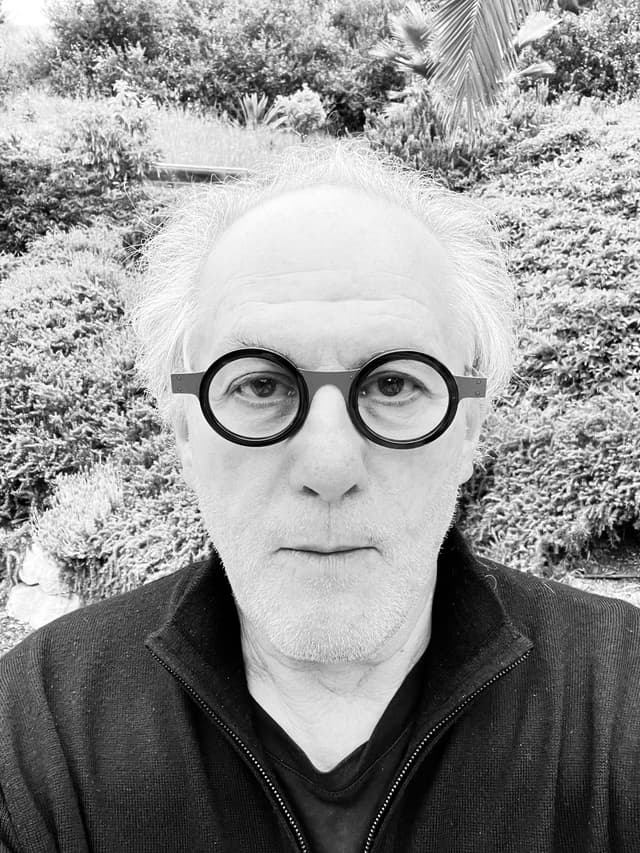
George Legrady belongs to the first generation of photographic-based artists to integrate computational processes into their practice. Beginning in the early 1980s—trained in the studio of AI pioneer Harold Cohen, who created software to simulate his own decision-making process while painting—Legrady recognized that algorithms weren't merely tools but creative collaborators capable of generating entirely new visual languages.
Legrady's work inhabits the permanent collections of institutions that define contemporary art: the Centre Pompidou in Paris, the Whitney Museum of American Art, the San Francisco Museum of Modern Art, the Los Angeles County Museum of Art, the National Gallery of Canada, and the Smithsonian American Art Museum. He has received a John Simon Guggenheim Fellowship, grants from the National Endowment for the Arts, the National Science Foundation, and the Graham Foundation for Advanced Studies in the Visual Arts.
As Distinguished Professor at UC Santa Barbara, where he directs the Experimental Visualization Lab, Legrady continues to investigate how image-generating technologies inadvertently redefine the data they process—and what that transformation means for how we see, understand, and represent our world.
The Collection
Physical Editions:
Each token is a non-fungible, uniquely identified digital artwork issued by AUTOMATA. Collectors who acquire a digital work may, upon inquiry, redeem one authenticated physical edition. These physical works are produced and signed by the artist in his studio in Santa Barbara.
Prints are realized on Hahnemühle Photo Rag Deckle Edge fine art paper, measuring 13 × 19 inches, with a roughly 1-inch border for framing, resulting in an image area of 9.5 × 17 inches. This option reflects the artist's long-standing engagement with physical image-making, which has remained a central part of his practice alongside his digital work.
For more information regarding print redemption, collectors may contact ameesia@automata.art
Legrady describes his methodology as "Algorithmic Aesthetics"—mining mathematical models for their aesthetic potential through collaboration between human judgment and computational output. For Digital Giverny, he built an autonomous system: establishing parameters, selecting source imagery, then allowing the algorithm to process and generate results with its own internal logic. Through iterative refinement at the boundaries between human intention and machine output, artist and system became collaborators.
The resulting compositions exist in visual territory no artist could reach through traditional means. Colors bleed across boundaries that shouldn't exist. Textures impose themselves where they don't belong. The algorithm finds harmonies that human perception would never propose but instantly recognizes as beautiful.
Why It Matters
Timeline of Recognition
1980s — Integrates computational processes into photographic practice; works enter museum collections including Musée d'art contemporain, Montreal and National Galleries of Canada
1990s — Pioneers interactive database narrative; receives Interval Research/Voyager/Wired competition award; publishes with ZKM
2000s — Receives Creative Capital Foundation Emerging Fields grant; Daniel Langlois Foundation grant; Seattle Public Library commission begins continuous operation (2005); LA Metro Rail commission completed (2006)
2010s — Works acquired by SFMOMA, LACMA, ZKM; receives John Simon Guggenheim Fellowship (2016); creates Digital Giverny (2018)
2020s — Works acquired by Centre Pompidou (2024); Art Gallery of Ontario; preparation for major exhibition presentation (Summer 2026)
Style Transfer and the First Digital Release
In August 2015, researchers published "A Neural Algorithm of Artistic Style"—a paper that would fundamentally alter the trajectory of AI-generated art. For the first time, a deep neural network could separate the content of an image from its style and recombine them at will. From this foundation emerged the conceptual framework enabling GANs, diffusion models, and the AI image generators now ubiquitous across culture.
Digital Giverny was created in 2018, just three years after the algorithm's introduction, by one of the few practitioners who understood what machine vision could mean for art.
George Legrady has worked in digital formats since the early 1990s—interactive data visualizations, custom software interfacing with databases, computational processes generating new visual languages. While institutions have collected physical outputs of his practice—photographs until around 1984, inkjet prints in the late 1980s, lenticular panels beginning around the underlying digital works themselves have remained in the studio, unavailable to collectors.
Digital Giverny changes this. For the first time, Legrady releases digital artwork as digital art—native to the format, collectible in its original form.
Selected Collections & Exhibitions
Institutional Collections
Centre Pompidou, Paris (2024) — Moscow TV, Raw Datia, Waxing Poetic
Whitney Museum of American Art — Artport, NYC
San Francisco Museum of Modern Art — At the Table
Los Angeles County Museum of Art — Vernon Collection (2009); We Are Stardust 3D lenticular panel (2018)
Santa Barbara Museum of Art — Authority of the News
ZKM Center for Art and Media — Collection, exhibitions, publications
Smithsonian American Art Museum — Early digital Fuji Jetgraphix inkjet print
National Gallery of Canada — Ottawa
Art Gallery of Ontario — Photography collection
Musée d'art contemporain — Montreal
Public Commissions
Making Visible the Invisible (2005–present) — Seattle Public Library, OMA/Rem Koolhaas
Continuous data visualization installation, 20 years in operation
Kinetic Flow (2006) — Los Angeles Metro Rail, Santa Monica/Vermont Station
Selected Honors
John Simon Guggenheim Fellowship — Visual Arts (2016)
Graham Foundation for Advanced Studies in the Visual Arts
National Science Foundation — Information & Intelligent Systems; Arctic Social Science
Creative Capital Foundation — Emerging Fields
Daniel Langlois Foundation for Arts, Science and Technology
Selected Interviews & Press
About the Artist's Website & Additional Resources
Digital Giverny represents AUTOMATA's inaugural 2026 exhibition—introducing one of computational art's most important figures to the collectors who will shape how we remember the origins of computer generated art.